For engineers and designers
Study mechanisms in motion and find the loads to size their actuators
Start from a simple diagram. Move a joint, change a load, and the reactions, internal forces and actuator loads update live.
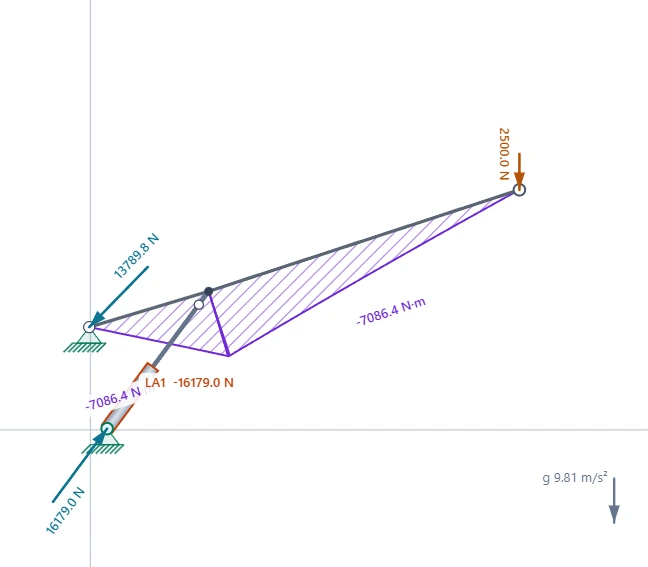
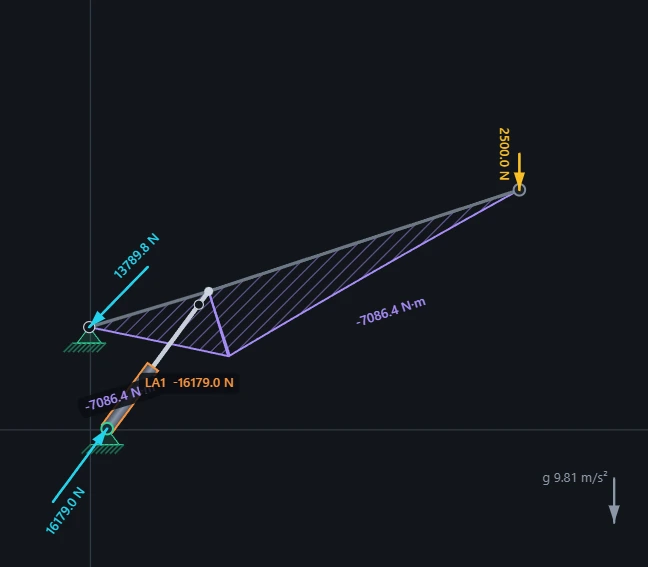
The shorter the lever arm, the greater the actuator force
A compact actuator mounted near the pivot pays for it in force. Move the mounting point further out and watch the actuator force and the bending moment drop.
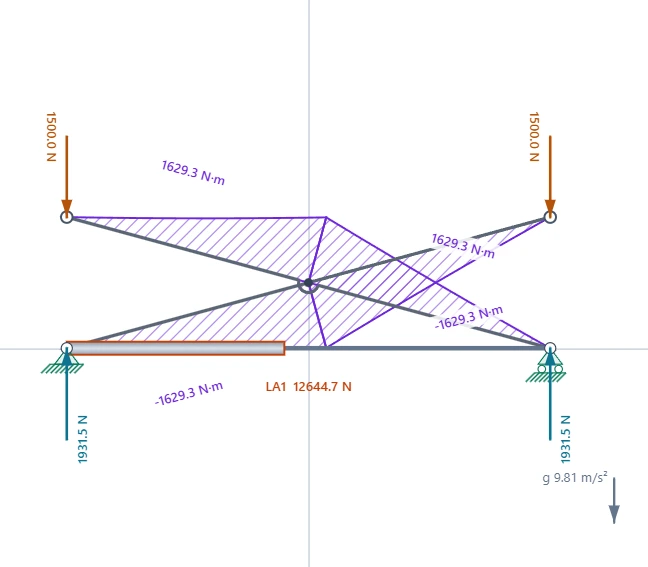
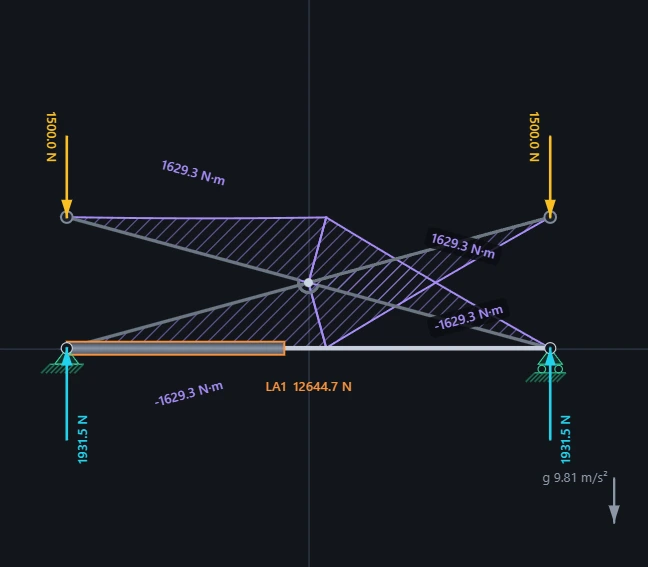
The worst position isn't always obvious
Near the folded position, a scissor's actuator works at a very poor angle. The load on the platform stays the same, but the actuator force can be many times higher at the lowest position — and that is often where the actuator has to be sized.
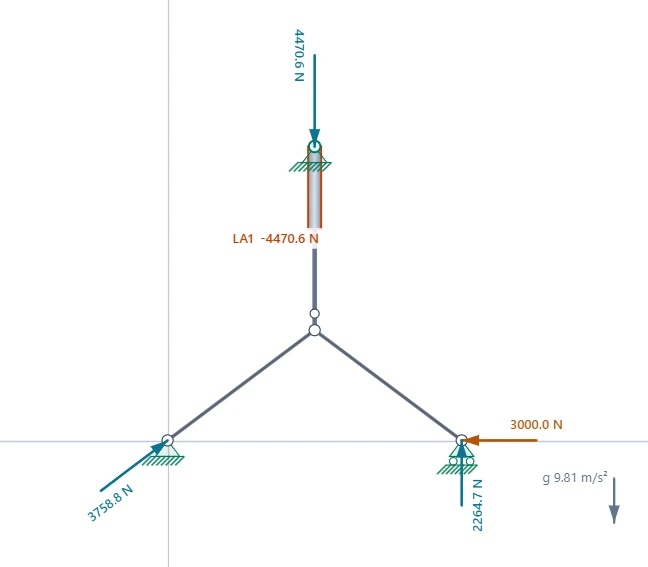
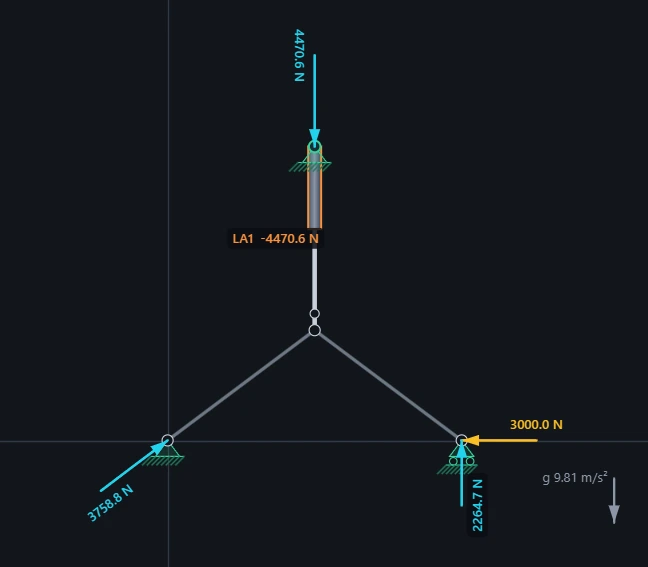
Not all things appear before analysing
In some cases, the force is multiplied in your favour. As the two links straighten, the actuator needs less and less force to hold the same load — which is why clamps and presses often use this principle. Run the motion and see where the force falls as the links straighten.
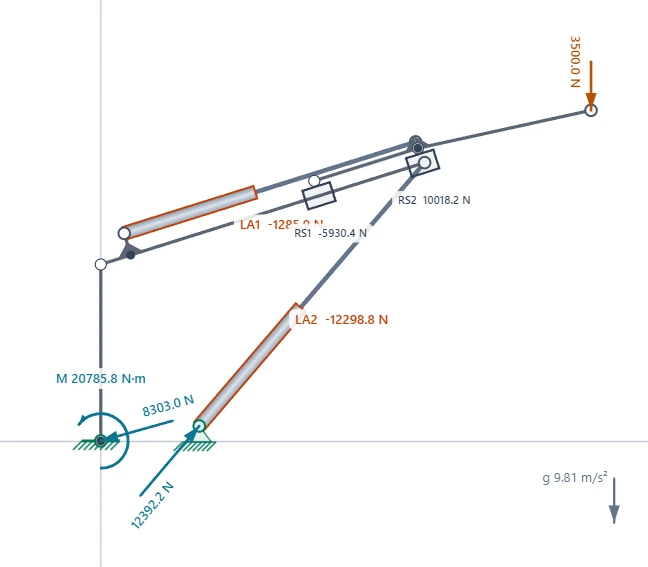
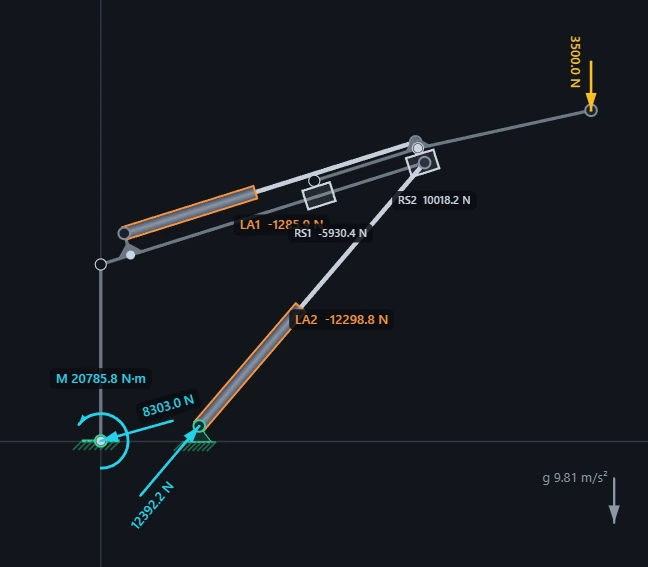
From a single beam to a telescopic boom
A telescopic boom is built from the same parts as a beam: members, supports, a rail slider for the sliding section and an actuator for each motion. The forces in all of them come out together.
Keep exploring
Follow the next question
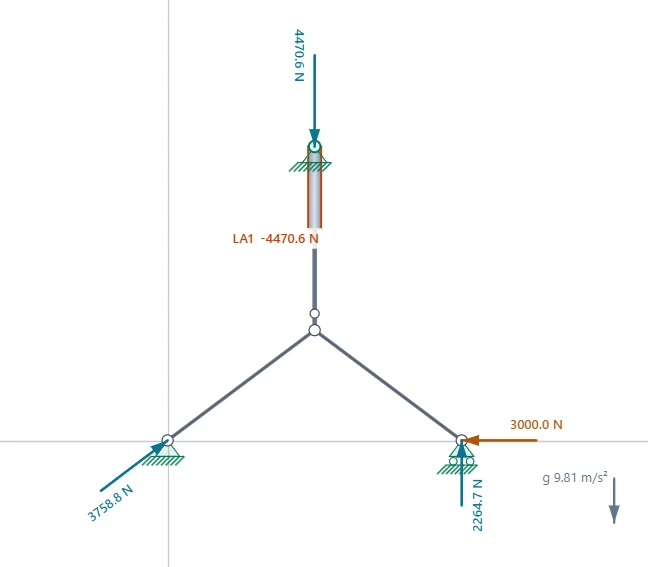
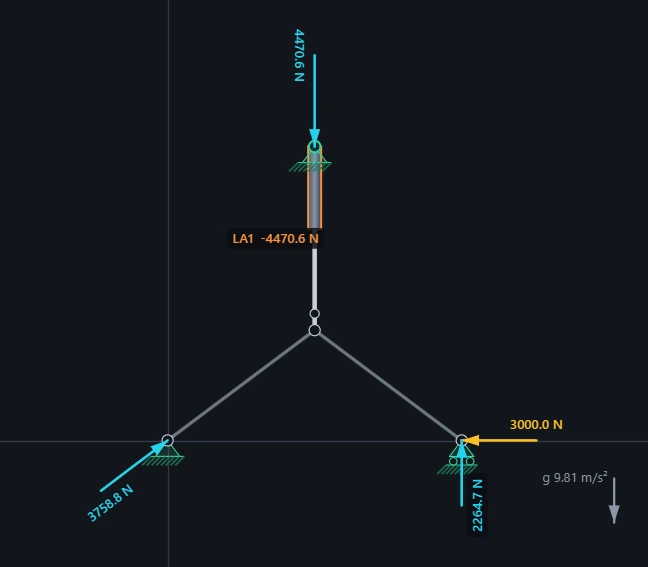 Guide · mechanism forces
Where does the actuator work hardest
The load stays the same, but the actuator force doesn't. As the lever arm shrinks, the force climbs.
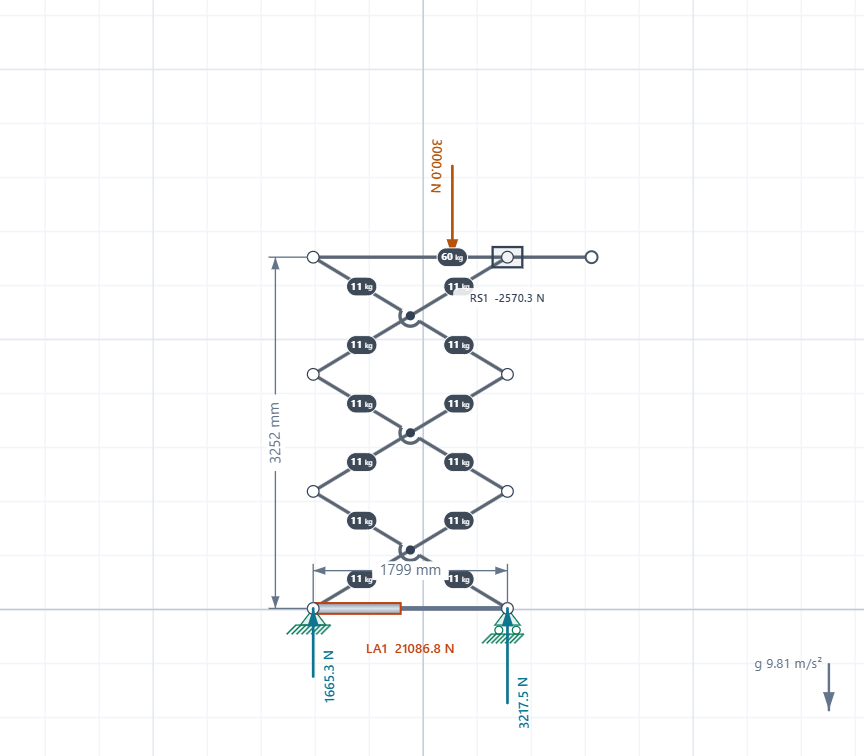
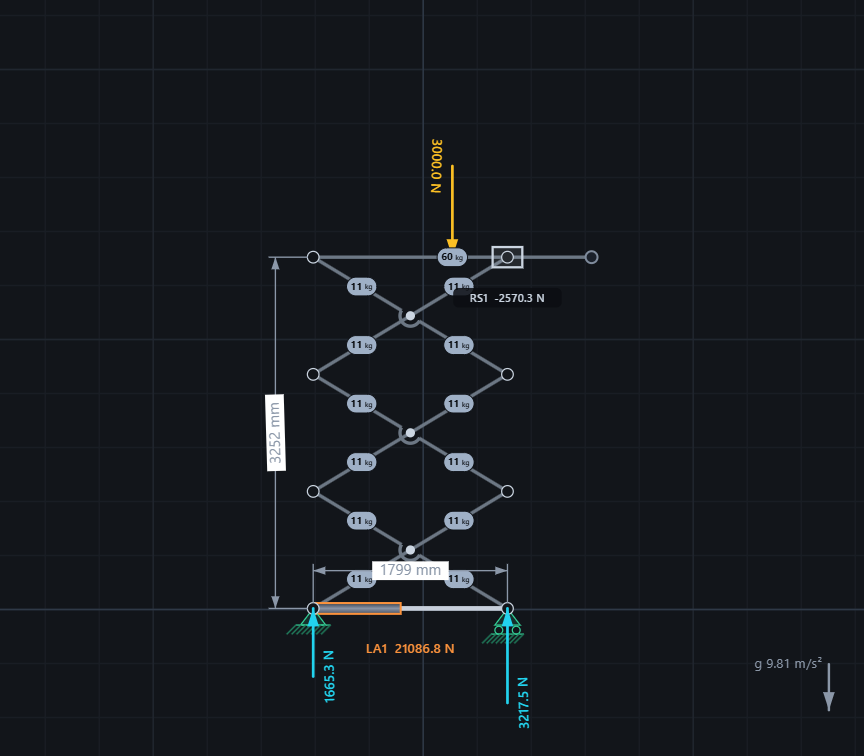 Example · scissor lift
Scissor lift: the hardest pull is at the bottom
A three-stage scissor lift raises a 3 kN platform load. Watch the actuator force peak at the bottom and fall on the graph as the platform rises.
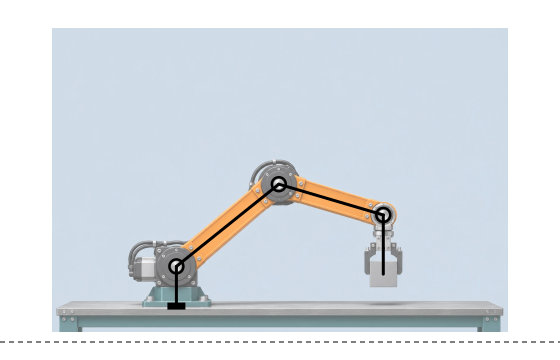
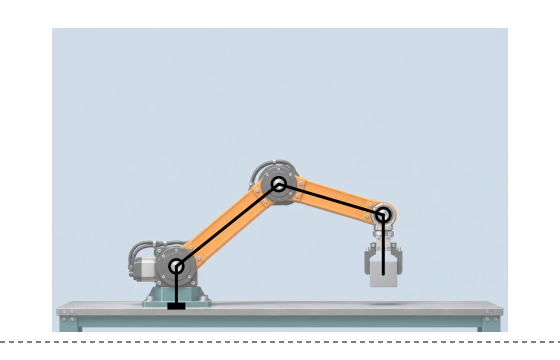 Illustrated example · EX205
Robot arm — pick and place
A 20 kg workpiece and an 8 kg gripper; follow the joint torques.
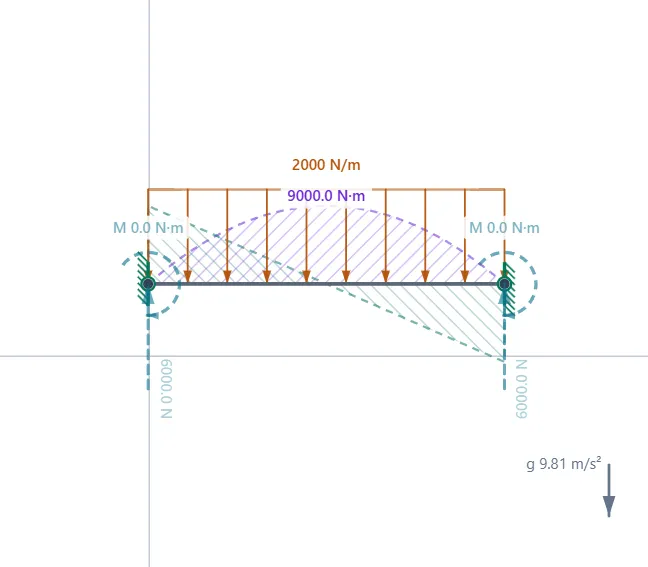
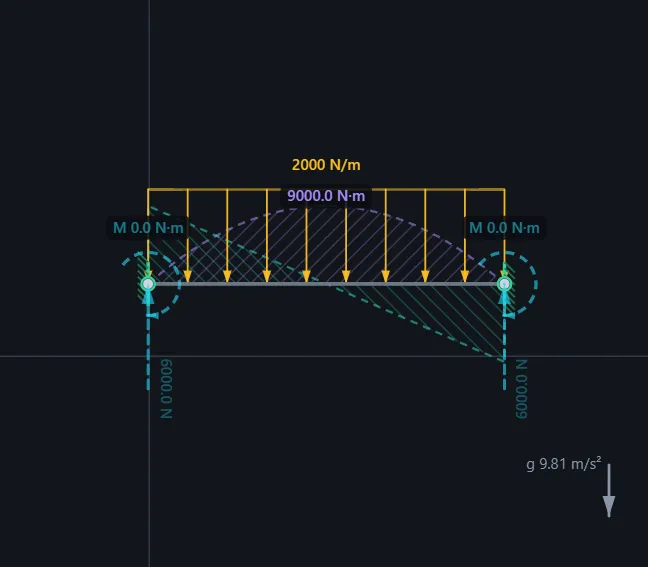 Validation · over-defined models
Fixing an over-defined model
A beam fixed at both ends is over-defined (statically indeterminate): statics alone cannot solve it. See how the app flags it and what changes it suggests.