Free-body diagrams · statics · mechanisms
Draw the mechanism. Understand the forces.
Draw a mechanism in your browser, add the loads, and see every force at once. Then set it moving and watch the forces change.
Public beta · open registration with email verification · Starter for free, Advanced at no charge during the beta release
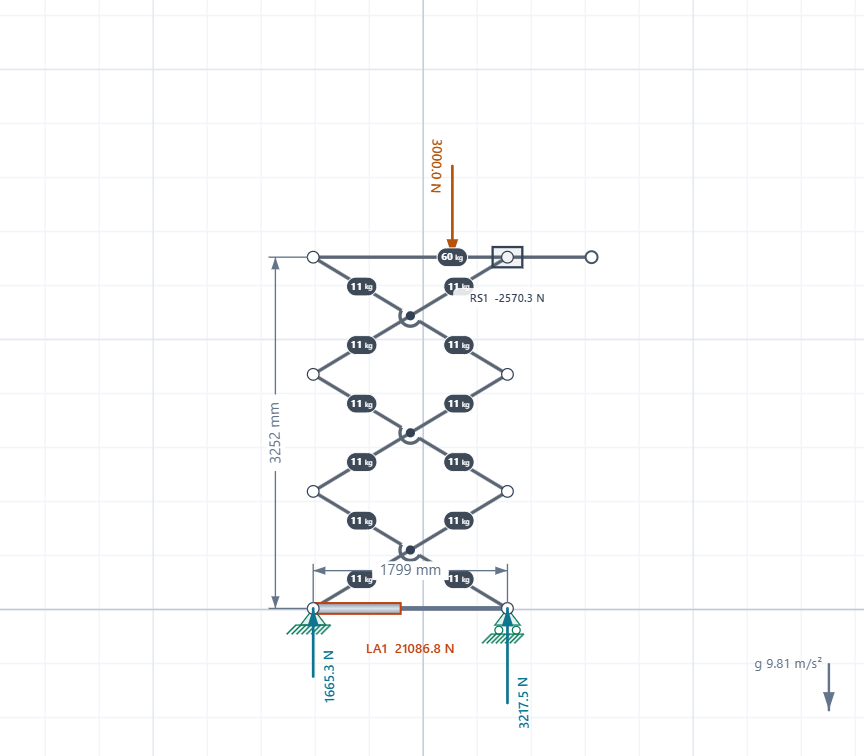
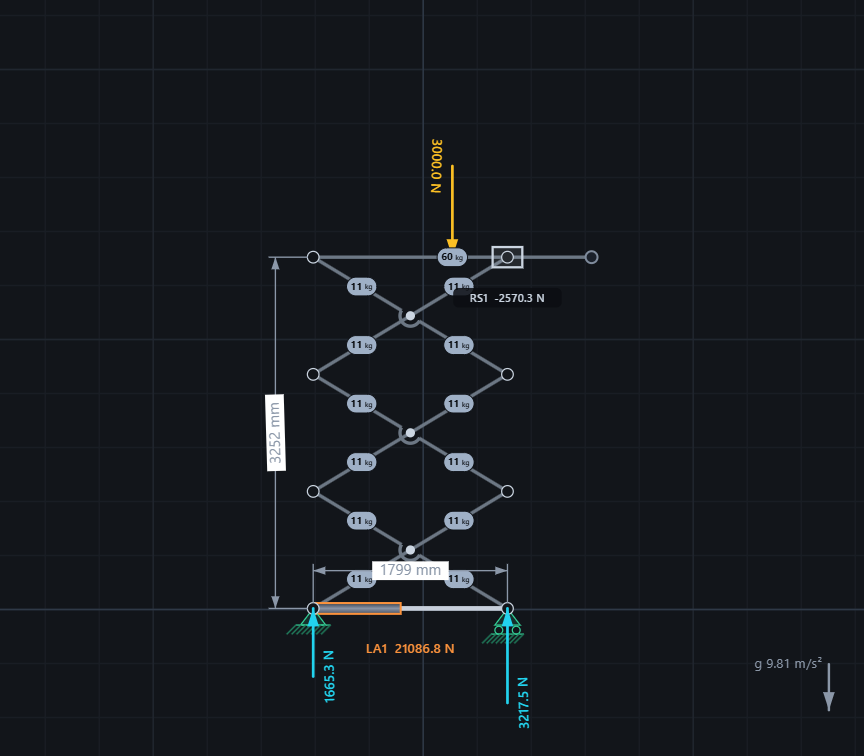
Three-stage scissor lift
The same ram and the same load, yet the force it needs at the bottom is far higher than at the top. Open the report and follow it through the lift.
View solved report preview app interfaceFor engineers, and for those learning to be one
It gives a quick first look at the forces in a model, so engineers can make early design decisions faster. Compare two layouts, move a support or an actuator, and see which one carries the load better — before any CAD or FEA work starts. Students get the same view and see how loads and supports turn into forces. A hand calculation can be checked against the result.
From a simple diagram to the forces
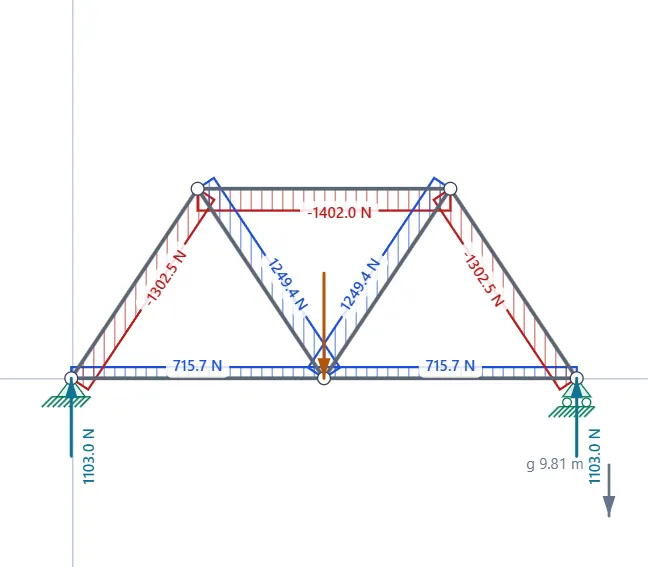
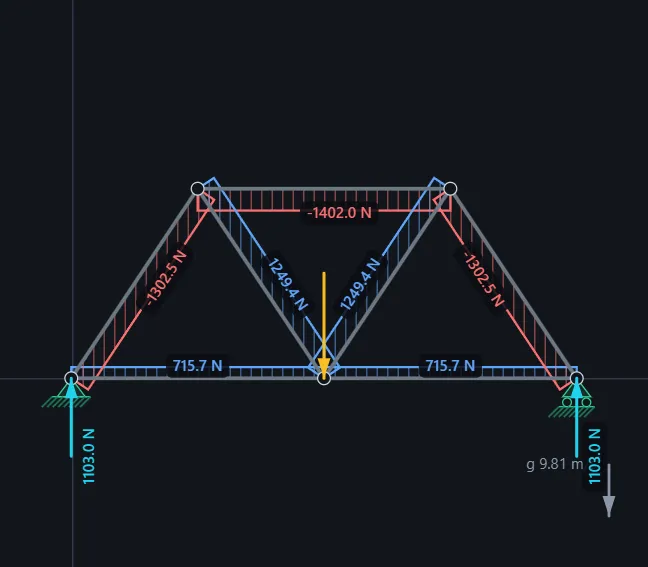
Draw the members, add supports and loads. Supports can be pinned, roller or fixed, and loads can be point loads, line loads, moments or gravity. The reactions and internal forces appear on the drawing as soon as the model is stable. For a mechanism, add a linear or rotary actuator and run the motion: a plot shows the position with the highest loads, and a report collects the results.
Methods and mechanics
FBD Studio solves the static equilibrium of a 2D model of rigid members: ΣFx = 0, ΣFy = 0, ΣM = 0.
The supports and joints you choose decide which reaction components exist, and a mechanism is solved in a geometrically compatible position.
With inertia switched on, each position is solved in dynamic equilibrium (ΣF = ma, ΣM = Iα) instead.
Limitations
The tool solves the model you draw — a missing support, an extra constraint or a joint in the wrong place changes the answer, so check the model and any solver messages first.
In models with mass, check whether inertia is switched on in the model settings: it can change the results significantly when parts speed up or slow down.
The current version gives reactions, internal forces and actuator loads only — it does not check strength, buckling, fatigue or safety factors.
Keep exploring
Follow the next question
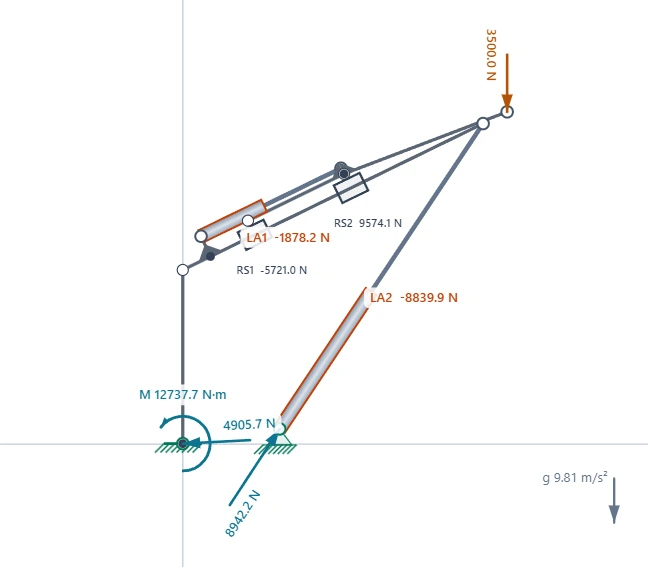
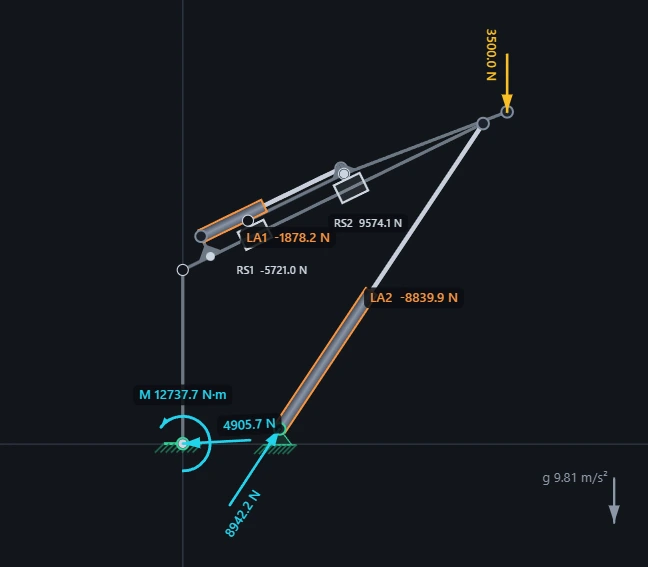 About FBD Studio
Team and contact
Get in touch with the team who built the app and worked out the examples.
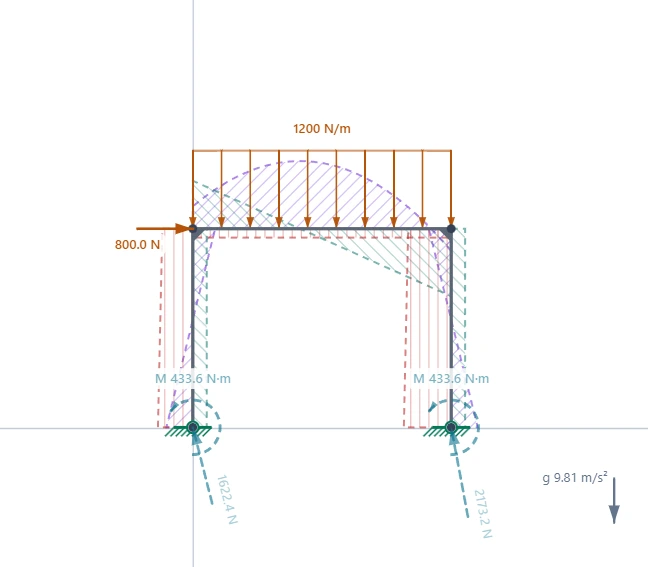
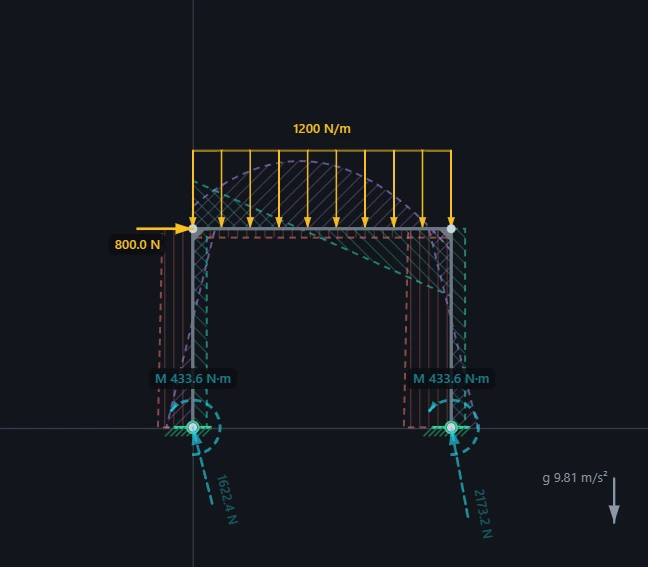 For students and educators
Connect the diagram to the equations
Draw the free-body diagram, follow the equilibrium equations step by step, and compare the result with your hand calculation. See how to adjust an over-defined model to make it statically determinate.
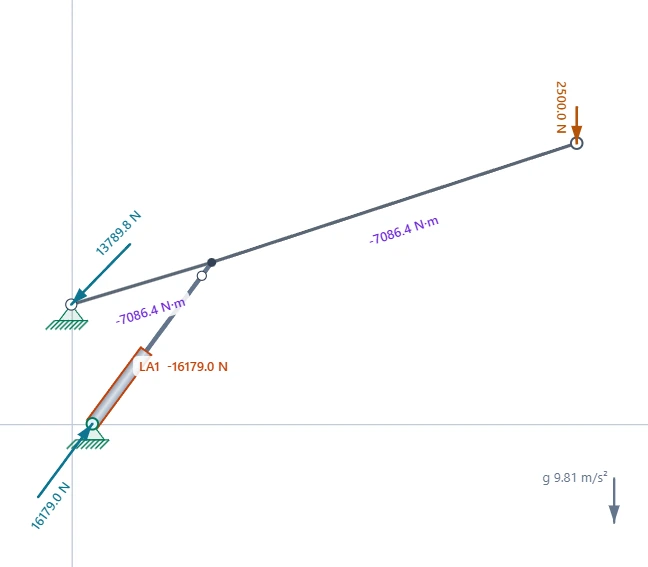
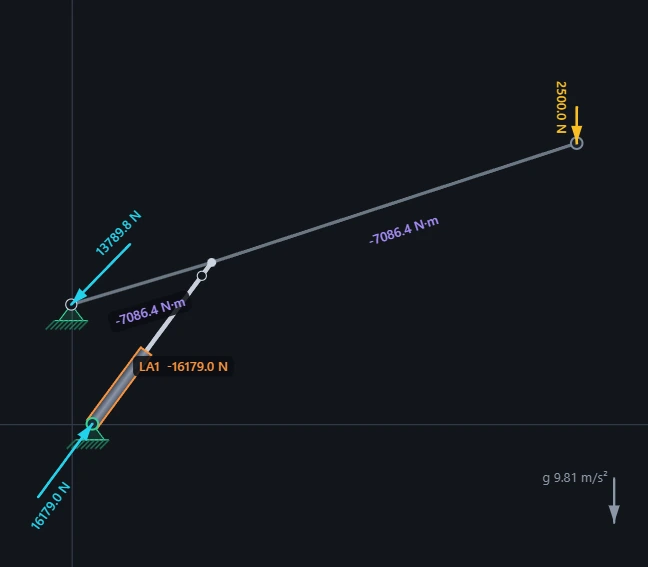 For engineers and designers
Find worst positions and peak loads
Draw the mechanism and follow the support reactions and actuator loads through its whole motion. Understand the internal forces before you spend time in CAD or FEM.
 Guides and examples
From a single beam to a full structure
Step-by-step statics guides, with the free-body diagram showing the support reactions, then worked examples that build up to larger structures.